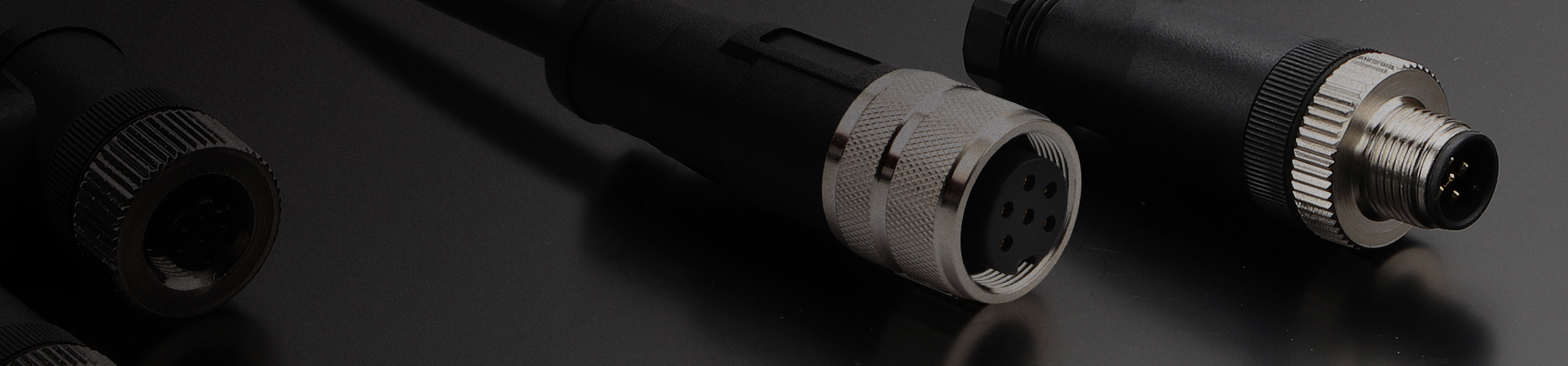
In today’s rapidly evolving technological landscape, wire harnesses, cable assemblies, and connectors play an indispensable role in ensuring the seamless operation of complex systems across industries such as industrial robotics, defense, and aerospace. These components act as the vital electrical and data pathways that maintain system integrity, reliability, and safety, even under the most demanding conditions. In industrial robotics, for instance, wire harnesses must endure constant motion, frequent bending, exposure to harsh substances like oils and coolants, and resist electromagnetic interference that can disrupt critical signal transmissions. High-quality robot cables and servo cables are specifically engineered to meet these challenges by combining flexibility, durability, and resistance to environmental stresses, thereby enhancing the operational uptime of automated production lines and reducing costly downtime caused by wiring failures.
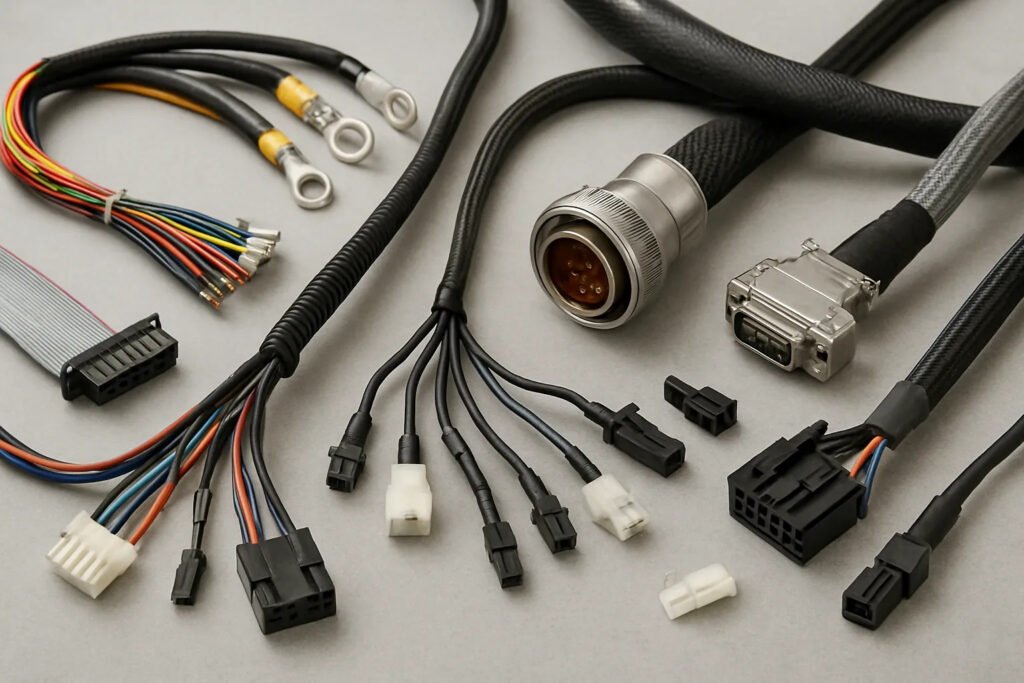
Meanwhile, in the military and aerospace sectors, the requirements for wiring solutions become even more stringent. Mil-spec cables and assemblies are designed to withstand extreme environmental conditions including intense vibrations, wide temperature fluctuations, moisture, and corrosive elements. These cables often incorporate advanced EMI shielding techniques, such as braided or foil shielding, to safeguard sensitive communication and control systems from electromagnetic interference. The use of ruggedized connectors and sealed cable assemblies is essential to maintain reliable electrical connections in mission-critical applications ranging from missile guidance and radar systems to secure military communications. Similarly, aerospace wiring must comply with rigorous certification standards to ensure the utmost reliability and safety in aircraft avionics, propulsion systems, and navigation equipment, where failure is simply not an option.
In addition to industrial and defense applications, the burgeoning field of unmanned aerial vehicles (UAVs) or drones places unique demands on wiring and interconnect technologies. Drone wiring must achieve a delicate balance between minimizing weight and maximizing durability and signal integrity. Lightweight, flexible cables and compact sensor connectors are critical in maintaining the drone’s flight efficiency, endurance, and precision. These wiring systems transmit high-speed data from sensors, cameras, GPS modules, and control units, requiring robust shielding to prevent signal degradation due to EMI generated by onboard electronics and environmental factors such as wind turbulence and vibration. Power connectors and cable assemblies must also deliver stable, high-current power to propulsion motors and auxiliary systems without adding unnecessary bulk or compromising the drone’s aerodynamics.
Connectors themselves form the backbone of any electrical system, serving as the critical interfaces between cables, sensors, controllers, and power sources. Modern connectors are evolving to meet the demands of miniaturization, increased pin density, and environmental protection. Innovations such as quick-mate connectors, high-temperature resistant materials, and IP-rated sealing technologies enable connectors to perform reliably in harsh industrial, military, and aerospace environments. Furthermore, the adoption of modular connector systems allows for faster assembly and maintenance, reducing downtime and improving system scalability.
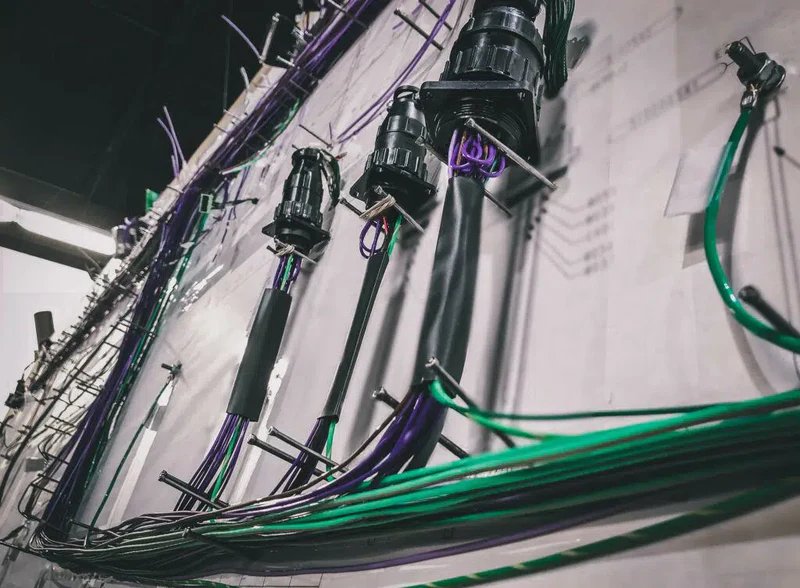
Looking forward, the industry is witnessing a trend toward the integration of hybrid cable assemblies that combine traditional copper wiring with fiber optics, enabling faster data transmission rates while reducing weight and EMI susceptibility. Advances in composite shielding materials further enhance the protection of sensitive signals from interference and physical damage. The use of digital twin technologies and AI-driven predictive maintenance models is becoming increasingly prevalent, allowing engineers to design more efficient wire harnesses and proactively monitor their health to prevent failures before they occur. As automation, artificial intelligence, and connectivity continue to expand across robotics, defense, and aerospace sectors, the role of wire harnesses, cable assemblies, and connectors will only grow in importance, driving innovation in design, materials, and manufacturing processes.
Frequently Asked Questions (FAQ)
What differentiates a wire harness from a cable assembly? A wire harness organizes multiple wires into a single, manageable unit, typically bundled and routed to simplify installation and protect against abrasion. A cable assembly, on the other hand, often includes additional protective features such as shielding, insulation, and connectors, designed to meet specific environmental and electrical requirements.
Why is EMI shielding crucial in these industries? Electromagnetic interference (EMI) can disrupt or degrade signal quality, potentially causing critical failures in communication and control systems. EMI shielding in cables and connectors prevents these disruptions, ensuring the reliable operation of sensitive electronic equipment in high-noise environments such as aircraft cockpits, military vehicles, and automated factories.
What makes mil-spec cables unique? Mil-spec cables comply with rigorous military standards that dictate durability, performance, and environmental resistance. These cables are tested for resistance to temperature extremes, mechanical stress, chemical exposure, and electromagnetic interference, making them suitable for the harshest applications.
Can wire harnesses be customized for specific robotic applications? Absolutely. Wire harnesses are often tailored to the precise needs of a robotic system, considering factors such as movement range, environmental exposure, voltage levels, and connector types to optimize performance and lifespan.
How should connectors be chosen for drone applications? Connectors for drones must be lightweight, compact, vibration-resistant, and provide secure locking mechanisms to maintain connection integrity during flight. Weather sealing and corrosion resistance are also critical to ensure long-term reliability.